
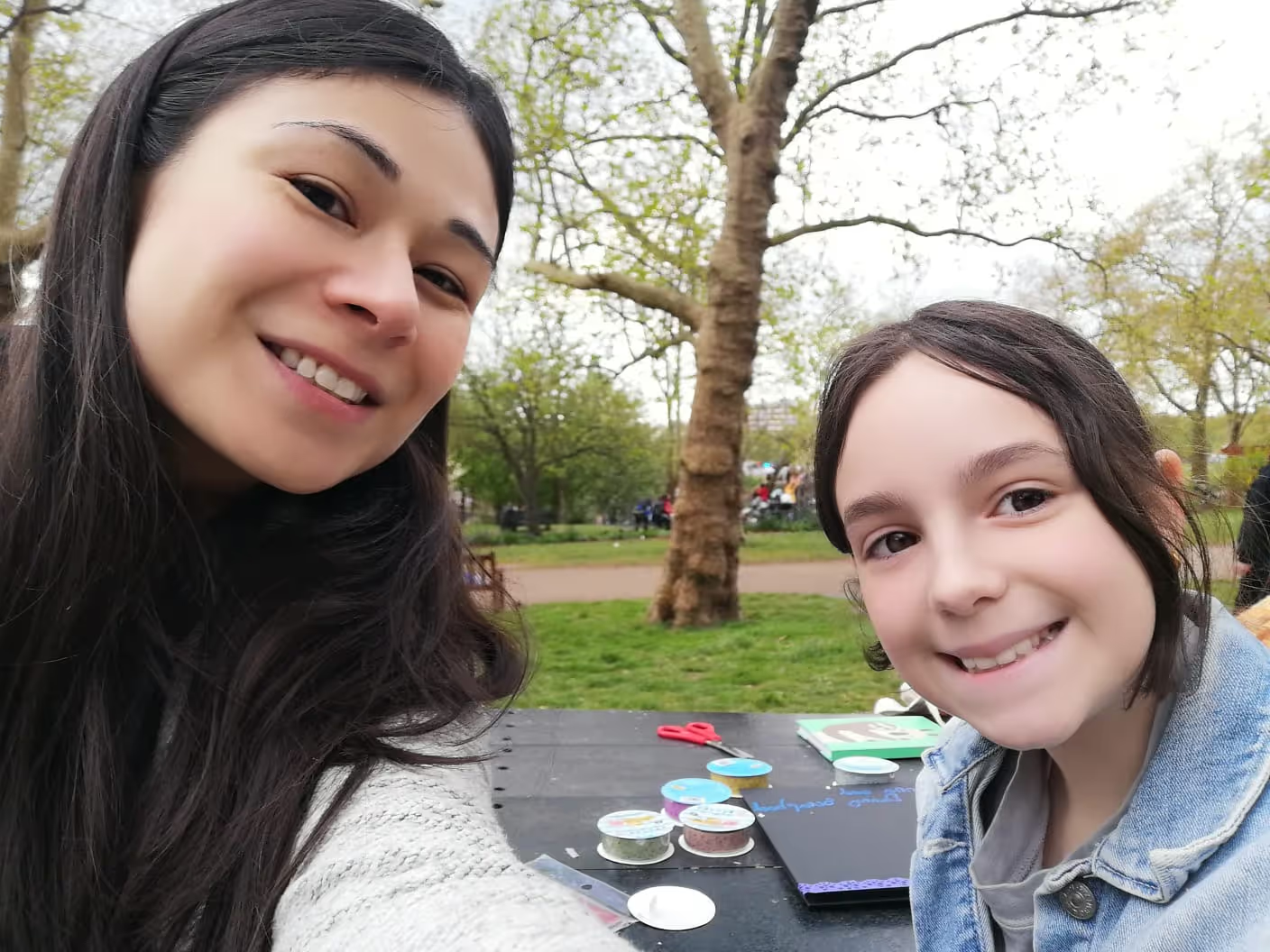
The long-term positive impact of child led mentoring
.svg)
.svg)
.svg)
hours of one-to-one mentoring delivered
.svg)
children supported
.svg)
Partner schools
HOW WE MEASURE IMPACT
We deliberately pinpoint our efforts toward a pivotal period of childhood. The ages of 8-11 years are a proven critical stage before mental health struggles and other difficulties become entrenched – and before the transition to secondary school.
We work in partnership with primary schools to identify children in that age group who are facing additional challenges. We match them with mentors who help them navigate, supporting them to build confidence, sense of self and ambitions for the future.
Through measuring impact annually, we demonstrate how across 12 months of mentoring, children strengthen their social and emotional capabilities, improve their wellbeing and finish the programme feeling better equipped for the future. It’s the timely intervention that makes such a big difference.
Support long-term impact for children in London. Click here to donate to The Kids Network today.
WHY THIS KIND OF REPORTING IS IMPORTANT
Every year, we publish our Impact Report – demonstrating the year-on-year progress that we’ve made as an organisation as well as the positive impact we’ve brought to the lives of little Londoners. And now, as we move into our 10th year, we have proof that the positive impact doesn't stop when the programme ends.
We’ve been working closely with specialist education researchers ImpactEd to understand the long-term impact of our mentoring programme – not just during the year of mentoring, but long beyond. ImpactEd’s fresh, outside perspective gave us actionable insights based on data that considers children’s confidence, wellbeing and outcomes over time. It’s all available to read in our Long Term Impact Report. ImpactEd’s full evaluation report is available to download below.
Demonstrating long-term impact helps us in each area of our work. Measurement reassures school partners that we have the methodology to achieve great results – with the case studies to prove it. It helps us engage volunteers because they can see that the time they spend will make a real difference. And it attracts funding and gifts from the community, because we are able to articulate what their generosity has achieved.
WHAT WE WANT YOU TO CONSIDER
Our report provides a decade’s worth of proof that supporting children at a formative stage with confidence, emotional literacy and agency helps equip them with the skills to thrive throughout adolescence and into adulthood. Our mentoring programme helps children to cope with challenges and discover opportunities.
Schools do great work, but they can’t do it alone – and that’s why our programme provides targeted support outside the school day. We make sure the children who need it most have extra access to enrichment, encouragement and individual attention. Their mentor becomes a consistent, trusted adult beyond family and school. It takes a city to raise a child. When communities step forward, children feel seen, valued and supported.
The Kids Network’s mentoring programme is a timely and powerful response to the pressures facing children in London. Our commitment is clear: every child who wants a mentor must have access to one, so that more children can grow up with the confidence, resilience and agency to shape their own futures.
Support this long-term impact for children in London. Click here to donate now.
The case for early intervention
Although it’s estimated that around half of all significant mental health problems begin before the age of 14, the right interventions aren’t being made for 70% of children. At a stage of rapid brain development, the way a child navigates challenges can shape emotional wellbeing, confidence, relationships and educational outcomes long into adulthood.
Supporting children during this time makes all the difference. Our programme works with children at the end of primary school and before the secondary school transition, at a time when many little Londoners find themselves experiencing stresses: exams, social media pressure, bullying or even exploitation risks.
We’ve long known the importance of early intervention and have been making the case for mentoring for primary age children since we began. In 2021, we published our Case for Early Intervention Report. Our latest report Connecting for Change makes this case even stronger.
EVERY CHILD DESERVES THE SUPPORT TO FEEL SAFE, VALUED AND ABLE TO THRIVE.
When children’s needs go unmet, the consequences extend beyond the individual, affecting families, communities and public services. The financial cost of late intervention is clear, with the NHS spending £670 million on mental health services for children. This strain is avoidable.
One-to-one, child-led mentoring provides an early, preventative response – offering a trusted adult who can help a child build emotional safety, resilience, confidence and a stronger sense of self before difficulties become entrenched.
This is why we do what we do.
Support long-term impact for children in London. Click here to donate to The Kids Network today.
.avif)
Representative from the Leap Federation

Themes from the report
.svg)
Building a sense of agency protects a child’s future
.svg)
Emotional literacy and self-understanding underpin long-term wellbeing
.svg)
Children who feel emotionally safe have a foundation for growth
Stronger relationships are an ongoing source of wellbeing
.svg)
Our one-to-one child-led approach works across gender and ethnicity

I went from being the weird kid to just being a kid.
mentee
.svg)
.svg)
.svg)